80 books available
Karl Liebknecht
One of the great classics of anti-militarism--originally published in 1907 and immediately banned.
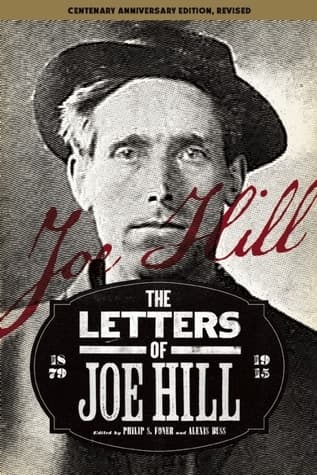
Philip S. Foner (ed)
The legend of Joe Hill, brought to life through his letters, songs, and writings.
David Douglass
Mary Davis
Israel's foreign policy is perceived to be essentially a defensive one by the international community. Why then is it the only nuclear power which refuses to sign the Non-Poliferation Treaty? What are its true foreign and nuclear policies? Using the Hebrew press as his main source, veteran human rights campaigner Israel Shahak reveals Israel's strategic foreign policy as presented through its own domestic media: ie what other Israeli Jews are told. He argues that the Israeli government, with the support of the US Jewish lobby, are conducting a global policy aiming to control virtually the whole of the Middle East for their own purposes.
John Couzin
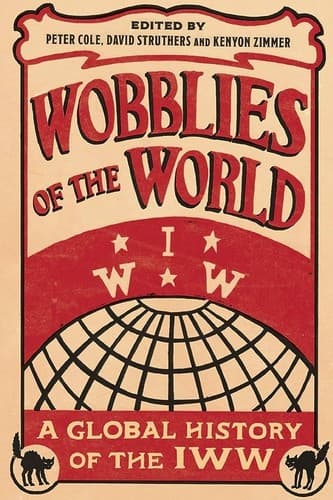
Cole, Struthers and Zimmer
Founded in 1905, Chicago's Industrial Workers of the World (IWW) is a union unlike any other. With members affectionately called "Wobblies" and an evolutionary and internationalist philosophy and tactics, it rapidly grew across the world. Considering the history of the IWW from an international perspective for the first time, Wobblies of the World brings together a group of leading scholars to present a lively collection of accounts from thirteen diverse countries, revealing a fascinating story of anarchism, syndicalism, and socialism. Drawing on many important figures of the movement--Har Dayal, James Larkin, William D. "Big Bill" Haywood, Enrique Flores Mag n, and more--the contributors describe how the IWW and its ideals spread, exploring the crucial role the IWW played in industries such as shipping, mining, and agriculture. Ultimately, the book illuminates Wobblie methods of organizing, forms of expression, practices, and transnational issues, offering a fascinating alternative history of the group.
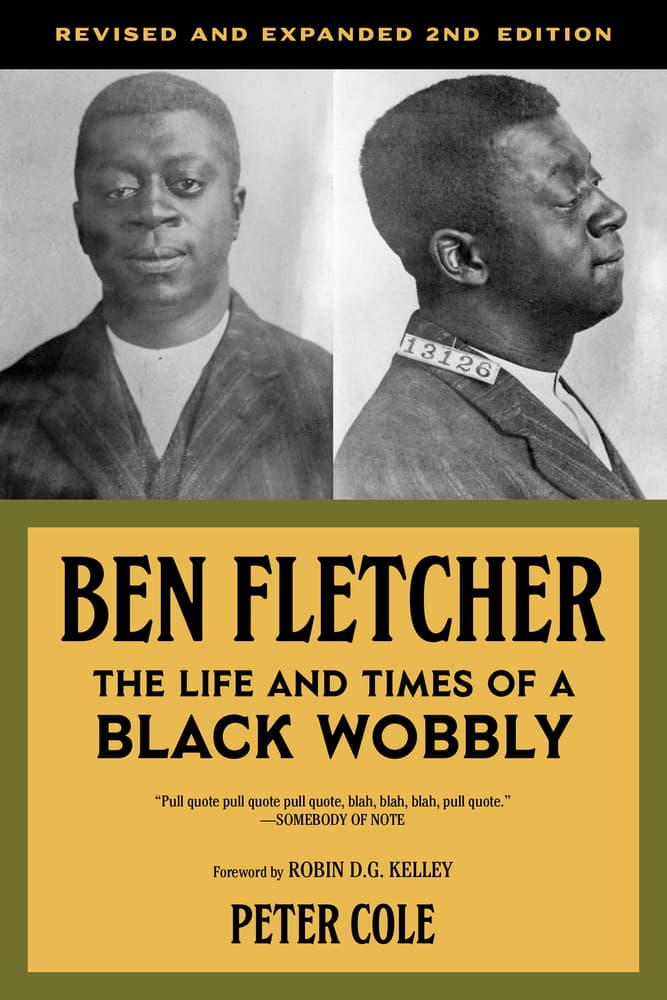
Peter Cole
Ben Fletcher: The Life and Times of a Black Wobbly tells the story of one of the greatest heroes of the American working class. A brilliant union organiser and a humorous orator, Benjamin Fletcher (1890 - 1949) was a tremendously important and well-loved African American member of the IWW during its heyday. Fletcher helped found and lead Local 8 of the IWW's Marine Transport Workers Industrial Union, unquestionably the most powerful interracial union of its era, taking a principled stand against all forms of xenophobia and exclusion.
Rosemary L. Caldicott
Mat Callahan & Yvonne Moore
Straight edge--hardcore punk's drug-free offshoot--has thrived as a subculture since the early 1980s. Its influence has reached far beyond musical genres and subcultural divides. Today it is more diverse and richly complex than ever, and in the past decade alcohol and drug use have become a much-discussed issue in radical politics, not least due to the hard work, dedication, and commitment to social and environmental justice found among straight-edge activists. X: Straight Edge and Radical Sobriety is Gabriel Kuhn's highly anticipated follow-up to his critically acclaimed Sober Living for the Revolution. Extensively illustrated and combining original interviews and essays with manifestos and reprints from zines and pamphlets, X is a vital portrait of the wide spectrum of people who define straight edge culture today. In the sprawling scope of this book, the notion of straight edge as a bastion of white, middle-class, cis males is confronted and challenged. X takes a piercing look at religion, identity, feminism, aesthetics, harm reduction, and much more. It is both a call to action and an elaborate redefinition of straight edge and radical sobriety.
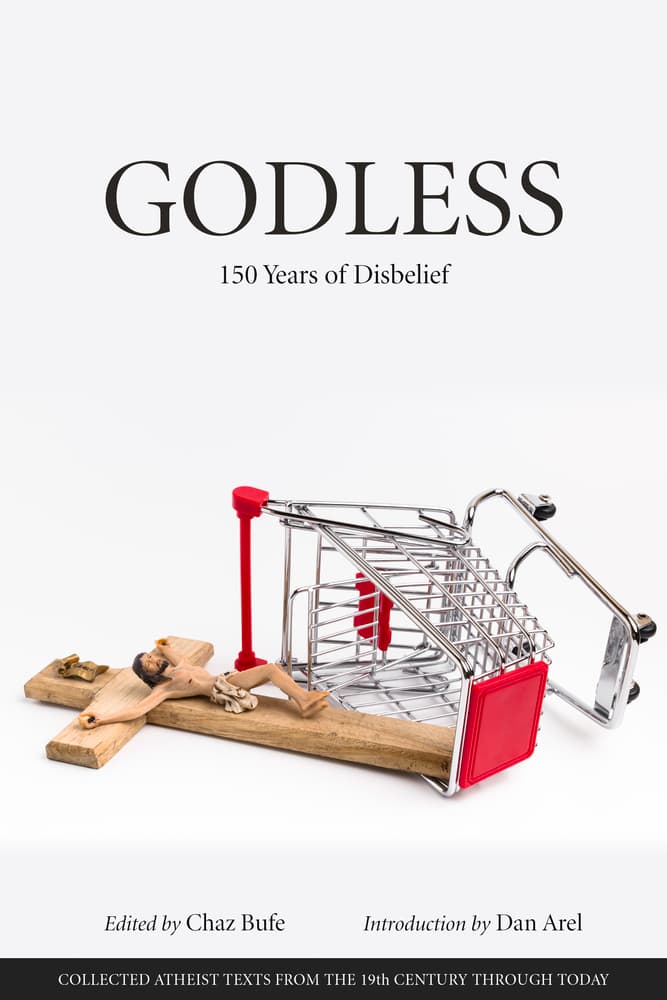
Chaz Bufe
Godless is a compilation of wide-ranging texts, both hilarious and horrifying, on atheism, belief, and religion. The selections in the book appeared in various formats from the late nineteenth century through the early twenty-first, and their authors were often active in the anarchist, Marxist, or radical leftist movements of their day. Derived from printed pamphlets, periodicals, and newspaper pieces that were mass-produced and widely distributed, these texts serve as freethinking propaganda in a media war against morbid authoritarian doctrines. With both a sophisticated analysis of inconsistencies in deistic beliefs and a biting satirical edge, Godless gives ammunition to those fighting fundamentalist bigotry--and more than a few reasons to abandon Christianity. Readers previously familiar with the authors' political polemics will be rewarded in contemplating another side of their remarkable literary output. Contributors include Emma Goldman, Ambrose Bierce, Chaz Bufe, E. Haldeman-Julius, Earl Lee, G. Richard Bozarth, Johann Most, Joseph McCabe, Matilda Gage, Pamela Sutter, S.C. Hitchcock, and Sébastien Faure.
Maurice Brinton
Jeremy Brecher
Involving nationwide general strikes, the seizure of vast industrial establishments, nonviolent direct action on a massive scale, and armed battles with artillery and tanks, this exciting hidden history is told from the point of view of the rank-and-file workers who lived it. This fiftieth anniversary edition brings the story up to date with chapters covering the "mini-revolts of the 21st century," including Occupy Wall Street and the Fight for Fifteen, and concludes by examining a wide range of current struggles, ranging from #BlackLivesMatter to the global "Student Strike for Climate" that may be harbingers of mass strikes to come.
Victor Serge
Brimming with the honesty and passionate conviction for which he has become famous, Victor Serge's account of the first year of the Russian Revolution--through all of its achievements and challenges--captures both the heroism of the mass upsurge that gave birth to soviet democracy, and the crippling circumstances that began to chip away at its historic gains. Year One of the Russian Revolution is Serge's attempt to defend the early days of the revolution against those, like Stalin, who would claim its legacy as justification for the repression of dissent within Russia.
Immanuel Ness & Dario Azzellini
From the dawning of the industrial epoch, wage earners have organized themselves into unions, fought bitter strikes, and gone so far as to challenge the very premises of the system by creating institutions of democratic self-management aimed at controlling production without bosses. With specific examples drawn from every corner of the globe and every period of modern history, this pathbreaking volume comprehensively traces this often underappreciated historical tradition. Ripe with lessons drawn from historical and contemporary struggles for workers’ control, Ours to Master and to Own is essential reading for those struggling to create a new world from the ashes of the old. Immanuel Ness is professor of political science at Brooklyn College, City University of New York, and edits WorkingUSA. Dario Azzellini is a writer, documentary director, and political scientist at Johannes Kepler University in Linz.
Jordi Martí-Rueda
Sixty illustrated profiles of those who fought in the International Brigades during the Spanish Civil War
Donny Gluckstein
For two months in 1871, the workers of Paris took control of Europe's most celebrated capital city. When they established the world's first workers' democracy--the Paris Commune--they found no ready-made blueprints, and no precedents to study for how to run their city without princes, prison wardens, or professional politicians. All they had was the boundless revolutionary enthusiasm of Paris's socialists, communists, anarchists, and radical Jacobins, all of whom threw their energies into creating a new society. As the city's bakers, industrial workers, and other "ruffians" built new institutions of collective political power to overturn social and economic inequality, their former rulers sought to thwart their efforts by any means necessary--ultimately deciding to drown the Communards in blood. By paying particular attention to the historic problems of the Commune, critical debates over its implications, and the glimpse of a better world the Commune provided, Gluckstein reveals its enduring lessons and inspiration for today's struggles. Donny Gluckstein is author of The Nazis, Capitalism and the Working Class and The Tragedy of Bukharin. He is a lecturer in history in Edinburgh and is a member of the Socialist Workers Party.
Paul Frolich
Striking the right balance between personal insight and political analysis, this biography traces Rosa Luxemburg's development from a humble Polish girl with a keen interest in herding geese to the most important leader of the German Communist Party.
Robert Benedetti. Charles H
A fictionalized account of Lucy and Albert Parsons and the events leading up to the Haymarket riot.
Tariq Ali & Phil Evans
This illustrated introduction's irreverent cartoons will amuse readers, and surprise them with its sophisticated portrait of Trotsky's life and works.
Louis Adamic
Labour disputes have produced more violence over a longer period in the US than any other industrialised nation in the world. From 1890 to 1930, hardly a year passed without a serious - and often deadly - clash between workers and management. Written in the 1930s and with a new introduction by Mike Davis, DYNAMITE recounts a fascinating and largely forgotten history of class and labour struggle in America's industrial beginnings.
Mitchell Abidor
Oral testimonies from the creative, violent and ground-shaking events in France, May '68.
When the Bastille was stormed on July 14, 1789, it wasn't a crowd of breeches-wearing professionals that attacked the prison, it was the working people of Paris. The Permanent Guillotine is an anthology of figures who expressed the will and wishes of this nascent revolutionary class, in all its rage, directness, and contradictoriness.
Eric Larson (ed)
For 25 years, the labour-community coalition Jobs with Justice has endured the brutal vagaries of the global economy with a single alternative economic vision. By putting its ideas into practice, it has won powerful victories with working-class communities. Through a series of interviews and essays, Jobs with Justice allows the activists that have built JwJ to tell why the organisation's core principle - the power of solidarity between unions, community groups, and immigrant, student and faith organisations - continues to drive its victories at all levels.
Sidney Lens
History.