354 books available
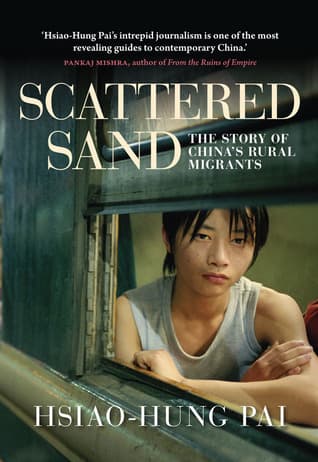
Hsiao-Hung Pai
Each year, 200 million workers from China’s vast rural interior travel between cities and provinces in search of employment: the largest human migration in history. This indispensable army of labour accounts for half of China’s GDP, but is an unorganized workforce—‘scattered sand’, in Chinese parlance—and the most marginalized and impoverished group of workers in the country. For two years, the award-winning journalist Hsiao-Hung Pai travelled across China, visiting labourers on Olympic construction sites, in the coal mines and brick kilns of the Yellow River region, and at the factories of the Pearl River Delta. She witnessed the outcome of the 2009 riots in the Muslim province of Xinjiang; saw towns in rubble more than a year after the colossal earthquake in Sichuan; and was reunited with long-lost relatives, estranged since her mother’s family fled for Taiwan during the Civil War. Scattered Sand is the result of her travels: a finely wrought portrait of those left behind by China’s dramatic social and economic advances.
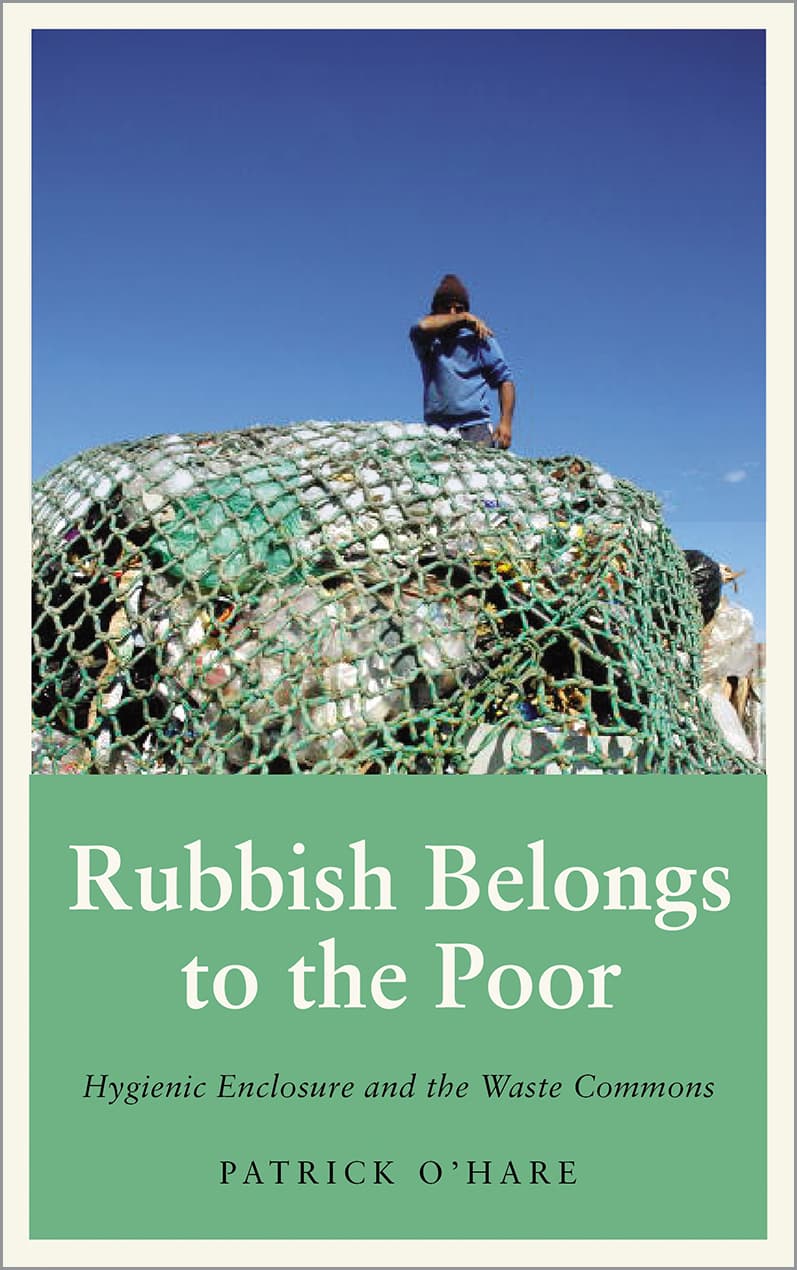
Patrick O'Hare
An ethnography of Uruguayan waste-pickers that reconceptualizes rubbish as a form of modern-day commons.
Rhona Michie, Andrew Feinstein & Paul Rogers
'Equips readers with the information they need to resist the lies that feed humanity's urge to commit suicide. Read it!' Yanis Varoufakis 'Devastating testimony. Faultless research. It's impossible to exaggerate the timeliness of this powerfully written book' Peter Oborne We are seeing injustices caused by war and occupation unfold in real-time via social media, and we are speaking out in our millions against these horrors. Yet, from Gaza to Ukraine, the bombs continue to fall. We must understand why this is happening if we are to end it. Monstrous Anger of the Guns lays bare the dark and deceitful world of the global arms trade, which, often funded in our name, is a business that counts its profits in billions and its losses in human lives. Leading activists and campaigners connect the dots, showing how notions of citizenship, democracy and trust in governments are misguided, and how we can fight back by building mass movements, using direct action and legal justice to end the flow of weapons and the environmental and human devastation they bring.
Steven Mayers & Jonathan Freedman (eds)
They are a mass migration of thousands of young people from Central America, yet each one travels alone: solito, solita.
Owen Jones
Joy James (ed)
What happens when the police becomes an army?
Nick Henck (ed)
The last speeches and communiques of Subcommander Marcos, delivered before he "ceased to exist."
Paul Hampton
A gripping exposé of the 2017 Grenfell Tower disaster and the systemic failures that led to Britain's worst residential fire since WWII
Valeria Graziano, Marcell Mars, & Tomislav Medak
Inspiring stories of real life and often risky activism resisting the global criminalization of care
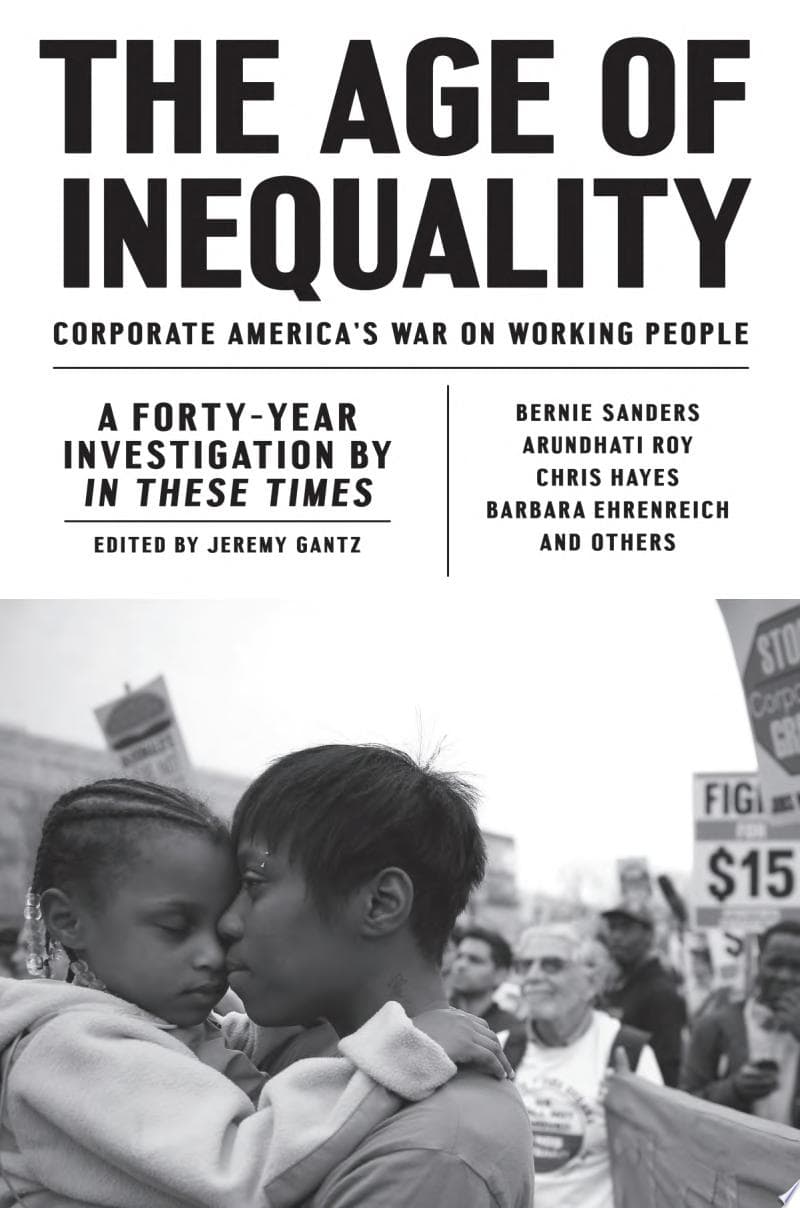
Jeremy Gantz (ed)
The stories behind the inequality crisis—a forty-year investigation by In These Times With heart-wrenching reporting and incisive analysis, In These Times magazine has charted a staggering rise in inequality and the fall of the American middle class. Here, in a selection from four decades of articles by investigative reporters and progressive thinkers, is the story of our age. It is a tale of shockingly successful corporate takeovers stretching from Reagan to Trump, but also of brave attempts to turn the tide, from the Seattle global justice protests to Occupy to the Fight for 15. Featuring contributions from Michelle Chen, Noam Chomsky, Tom Geoghegan, Juan González, David Moberg, Salim Muwakkil, Ralph Nader, Frances Fox Piven, Keeanga-Yamahtta Taylor, Slavoj Žižek, and many others, The Age of Inequality is the definitive account of a defining issue of our time.
Dana Frank
Corporate Watch
Capitalism thrives on crisis, and the multiple global environmental crises, including climate change and habitat and biodiversity loss, are creating new markets from which to generate profit. Those promoting green capitalism argue that if nature was valued correctly it will not only be protected, but even enhanced, along with the health of the economy and well-being in society. However, it is a contradiction in terms. Capitalism is fundamentally exploitative of people and the natural world, it is not and cannot be "green." Green capitalism involves various institutions, including governments, corporations, think tanks, charities and NGOs, implementing policies, practices and processes to incorporate nature into capitalist market systems. It takes the same capitalist ideas and values that create environmental crises--i.e. continual economic growth, private property, profit and 'free' markets--and applies them to the natural world as a way to solve those crises. It serves to maintain capitalism's dominance, both through finding new ways to generate profit, and as a way of protecting it from criticism of being environmentally destructive. This guide is intended as an introduction to the ideas surrounding green capitalism as well as the alternatives to it. We hope it will support attempts to resist the threat of green capitalism and create space for real ecological alternatives.
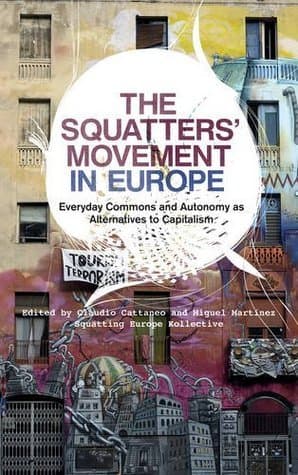
Claudio Cattaneo & Miguel A. Martinez
The Squatters' Movement in Europe is the first definitive guide to squatting as an alternative to capitalism. It offers a unique insider's view on the movement – its ideals, actions and ways of life. At a time of growing crisis in Europe of high unemployment, dwindling social housing and declining living standards squatting has become an increasingly popular option. The book is written by an activist-scholar collective, of which all members have direct experience of squatting and many are still squatters today. There are contributions from Holland, Spain, the USA, France, Italy, Germany, Switzerland and the UK. In an age of austerity and precarity this book contributes with in-depth reflections and practical examples of what has been achieved by this resilient social movement, which holds lessons for policy makers, activists and academics alike.
Samuel Burgum
Squatting in London has a rich and diverse history. Currently, squatters live a marginalized, stigmatized, and criminalized existence, yet they persist. Behind the glittering façade of shiny new buildings, London is a network of vacant offices, boarded-up shops, and dilapidated pubs that host some of the city's poorest and most determined citizens exiled and increasingly pushed to the margins. This book accounts for the real lives of the city's squatters: Their ambitions and struggles. Squatting is a challenge to the logic of property which underpins the city. Squats are political acts by finding refuge, staying put, creating spaces, and participating in counter-cultures. They directly oppose the speculation, gentrification, and regeneration that controls London today. From wasted office blocks transformed into a life-saving homeless shelter to temporary art exhibitions and raves; from an empty doctor's surgery to a library closed by cuts; from mutual aid networks set up during the pandemic to restaurants, shops, offices, and pubs - Squatting London is an alternative, underground and rebellious ethnographic account of a city you thought you knew already.
Houria Bouteldja
Defeating the rise of the fascists will take an epic project of anticolonial unity
Dario Azzellini, Michael G. Kraft
The Class Strikes Back examines case studies of twenty-first-century workers' struggles from both the Global North and South, highlighting the stories of workers fighting to organize and join democratic and independent unions.
Stephen Armstrong
75 years after the Beveridge Report: The shocking extent of hardship in the UK Right now in the UK, 13 million people live in poverty; one in five children subsist below the poverty line. Figures such as these suggest devastating repercussions for health, education and life expectancy. The new poor, however, is an even larger group than these official statistics suggest, and its conditions are something new to our era. More often than not, these people are the working poor, living precariously and betrayed by austerity. In The New Poverty, Stephen Armstrong tells the stories of the most vulnerable in British society. He explores an unreported country, abandoned by politicians and stranded as the welfare state has shrunk. Furthermore, as benefit cuts continue into 2018 and beyond, Armstrong asks what will be the long-term impact of Brexit and—on the anniversary of the Beveridge Report—what we can do to keep the giants of indigence at bay.
Jake Alimahomed-Wilson & Ellen Reese (eds)
Amazon's ubiquity is finally covered within one book - and in it lies the answers on how to take on this new, terrifying form of capitalism
Ray Acheson
Abolishing State Violence calls for the abolition of structures of violence, including police, prisons, borders, war, nuclear weapons, surveillance, and capitalism.
Cal Winslow
A historical analysis of the General Strike of 1919 in Seattle On a grey winter morning in Seattle, in February 1919, 110 local unions shut down the entire city. Shut it down and took it over, rendering the authorities helpless. For five days, workers from all trades and sectors – streetcar drivers, telephone operators, musicians, miners, loggers, shipyard workers – fed the people, ensured that babies had milk, that the sick were cared for. They did this with without police – and they kept the peace themselves. This had never happened before in the United States and has not happened since. Those five days became known as the General Strike of Seattle. Chances are you’ve never heard of it. In Radical Seattle, Cal Winslow explains why. Winslow describes how Seattle’s General Strike was actually the high point in a long process of early twentieth century socialist and working-class organization, when everyday people built a viable political infrastructure that seemed, to governments and corporate bosses, radical – even “Bolshevik.” Drawing from original research, Winslow depicts a process that, in struggle, fused the celebrated itinerants of the West with the workers of a modern industrial city. But this book is not only an account of the heady days of February 1919; it is also about the making of a class capable of launching one of America’s most gripping strikes – what E.P. Thompson once referred to as "the long tenacious revolutionary tradition of the common people." Reading this book might increase the chance that something like this could happen again – possibly in the place where you live.
Nigel Smith
The Ranters - like the Levellers and the Diggers - were a group of religious libertarians who flourished during the English Civil War (1642–1651), a period of social and religious turmoil which saw, in the words of the historian Christopher Hill, 'the world turned upside down'. A Collection of Ranter Writings is the most notable attempt to anthologise the key Ranter writings, bringing together some of the most remarkable, visionary and unforgettable texts. The subjects range from the limits to pleasure and divine right, to social justice and collective action. The Ranters have intrigued and captivated generations of scholars and philosophers. This carefully curated collection will be of great interest to historians, philosophers and all those trying to understand past radical traditions.
Evan Smith
A ground-breaking examination of how the Communist Party of Great Britain helped shape the anti-racist movement in the U.K.
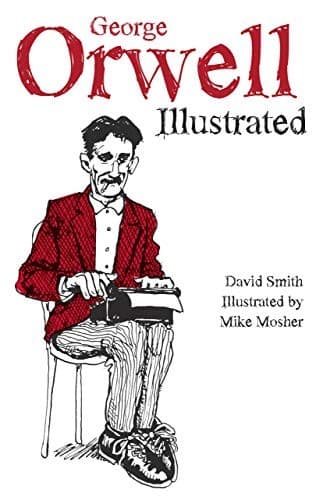
David Smith & Mike Mosher
George Orwell's story told in full, with a light touch and copious illustrations
Kristin Ross
The 1870s in France – Rimbaud’s moment, and the subject of this book – is a decade virtually ignored in most standard histories in France. Yet it was the moment of two significant spatial events: France’s expansion on a global scale, and, in the spring of 1871, the brief existence on the Paris Commune – the construction of the revolutionary urban space. Arguing that space, as a social fact, is always political and strategic, Kristin Ross has written a book that is at once a history and geography of the Commune’s anarchist culture – its political language and social relations, its values, strategies, and stances. Central to her analysis of the Commune as a social space and oppositional culture is a close textual reading of Arthur Rimabaud’s poetry. His poems – a common thread running through the book – are one set of documents among many in Ross’s recreation of the Communard experience. Rimbaud, Paul Lafargue, and the social geographer Élisée Reclus serve as emblematic figures moving within and on the periphery of the Commune; in their resistance to the logic and economy of the capitalist conception of work, in their challenge to work itself as a term of identity, all three posed a threat to the existing order. Ross looks at these and other emancipatory notions as aspects of Communard life, each with an analogous strategy in Rimbaud’s poetry. Applying contemporary theory, to a wealth of little-known archival material, she has written a fresh, persuasive, and original book.