354 books available
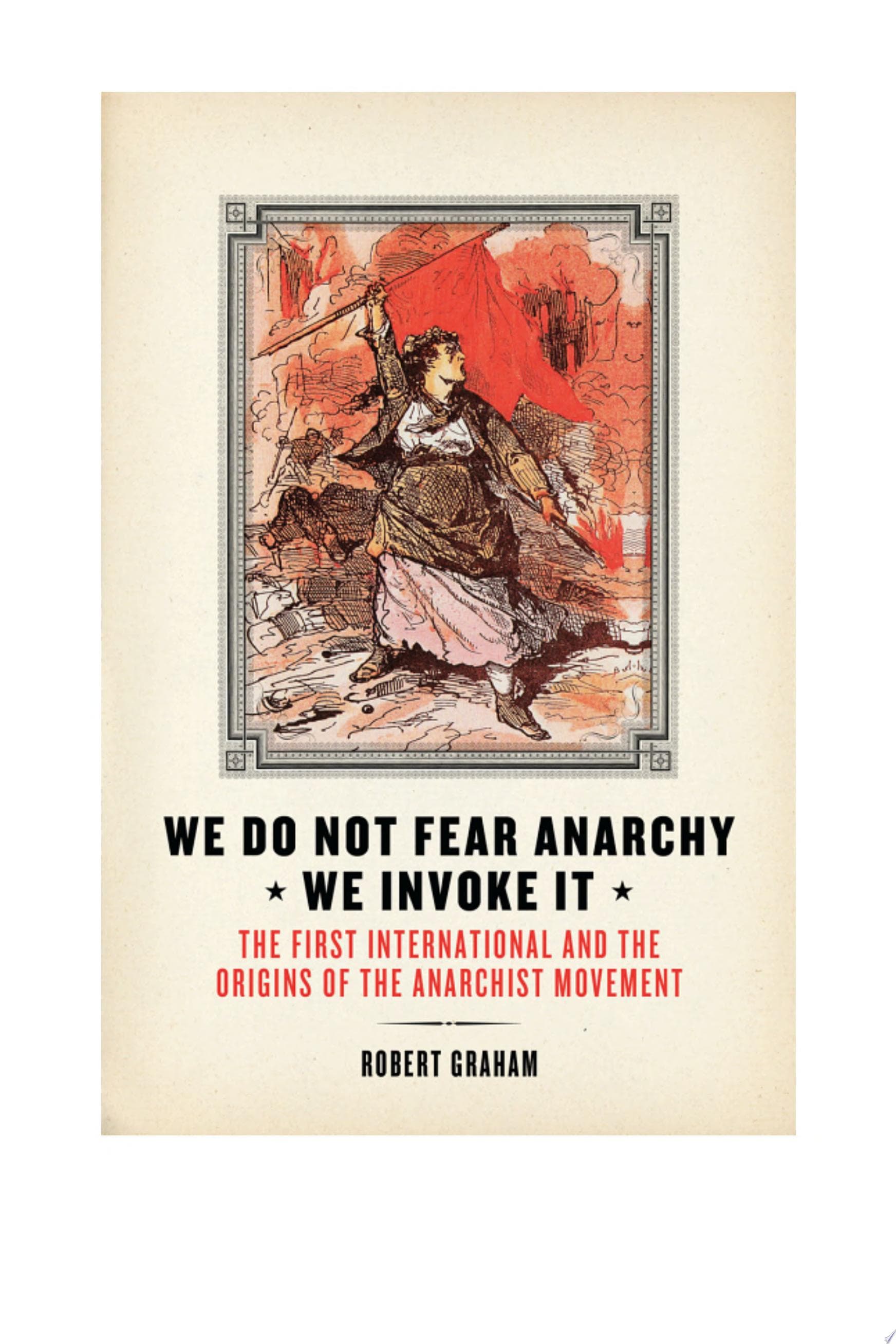
Robert Graham
From 1864 to 1880, socialists, communists, trade unionists, and anarchists synthesized a growing body of anticapitalist thought through participation in the First International—a body devoted to uniting left-wing radical tendencies of the time. Often remembered for the historic fights between Karl Marx and Michael Bakunin, the debates and experimentation during the International helped to refine and focus anarchist ideas into a doctrine of international working class self-liberation. An unprecedented analysis of an often misunderstood history.
Richard Gough Thomas
A biography of the early anarchist whose life and work was at the heart of British Radicalism.
Emma Goldman
A true classic of radical literature, in its first scholarly, annotated edition. Emma Goldman, the "notorious anarchist" deported from the United States in 1919 for "seditious activities," was a leading figure of American anarchism for almost thirty years. She continued to write and speak on anarchism for the rest of her life in exile, first in Soviet Russia and then in Europe--including Spain during the Spanish Revolution--and, finally, Canada. Goldman played a pivotal role in the development of anarchism in America and Europe in the first half of the twentieth century. This collection, first published in 1910 by her press, Mother Earth Publishing Association, illustrates her wide-reaching mind and ability to bring together strands of American and European individualism, anarchist communism, and early feminist thinking to develop a body of work that continues to influence the theory and practice of anarchism today. Essays include "Anarchism: What It Really Stands For," "The Psychology of Political Violence," "Prisons: A Social Crime and Failure," "The Hypocrisy of Puritanism," "The Tragedy of Woman's Emancipation," and "Marriage and Love," among others. A new introduction by Moran and Pateman situates Goldman's thinking in the movement of her day but also makes clear why her essays are still vital. Annotations throughout bring to light individuals and events that enrich our understanding of Goldman's writings. The Working Classics Series revives lineages of radical thought from the history of the anarchist movement.
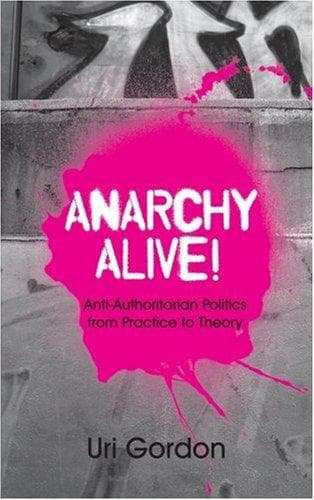
Uri Gordon
Anarchist politics are at the heart of today’s most vibrant and radical social movements. From squatted social centres and community gardens to acts of sabotage and raucous summit blockades, anarchist groups and networks are spreading an ethos of direct action, non-hierarchical organizing and self-liberation that has redefined revolutionary struggle for the 21st century.Anarchy Alive! is a fascinating, in-depth look at the practice and theory of contemporary anarchism. Uri Gordon draws on his activist experience and on interviews, discussions and a vast selection of recent literature to explore the activities, cultures and agendas shaping today’s explosive anti-authoritarian revival. Anarchy Alive! also addresses some of the most tense debates in the contemporary movement, using a theory based on practice to provocatively reshape anarchist discussions of leadership, violence, technology and nationalism. This is the ideal book for anyone looking for a fresh, informed and critical engagement with anarchism, as a mature and dynamic political force in the age of globalisation.
Antoine Gimenez. The Giménologues (eds) & Paul Sharkey (trans)
A fascinating memoir of the Spanish Civil War as well as an new approach to writing radical history.
Peter Genderloos
How does nonviolence fail our movements?
This book takes examples from around the world, picking through history and anthropology, showing that people have, in different ways and at different times, demonstrated mutual aid, self-organization, autonomy, horizontal decision making, and so forth--the principles that anarchy is founded on--regardless of whether they called themselves anarchists or not. Too well documented to be strictly mythology, and too expansive to be strictly anthropology, this is an inspiring answer to the people who say that anarchists are utopian: a point-by-point introduction to how anarchy can and has actually worked.
Rhiannon Firth
As disasters become more commonplace, we need to think of alternatives for relief.As disasters become more commonplace, we need to think of alternatives for relief
Wolfgang Eckhardt. Robert M. Homsi, Jesse Cohn, Cian Lawless, Nestor McNabb & Bas Moreel (trans)
The First Socialist Schism chronicles the conflicts in the International Working Men's Association (First International, 1864-1877), which represents an important milestone in the history of political ideas and socialist theory. This can be seen as a decisive moment in the history of political ideas: the split between centralist party politics and the federalist grassroots movement. The separate movements in the International - which would later develop into social democracy, communism and anarchism - found their greatest advocates in Bakunin and Marx.
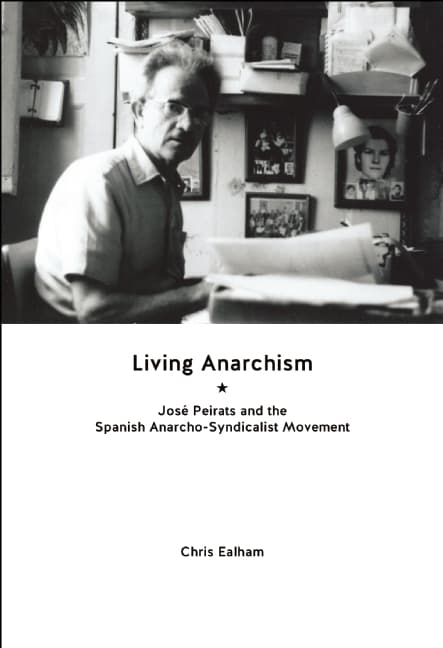
Chris Ealham
A fascinating, broad history anchored by the life of Jose Pierats. We follow his development from gang member to union organiser to anarchist intellectual, journalist and revolutionary. Both a study of one man and a collective biography of the working class into which he was born, Living Anarchism illuminates the human foundations in the development of Spanish anarchism - the ties of kinship, friendship, and community that cemented the largest anti-authoritarian movement in the world. It also contains the first in-depth study of the CNT labour union in exile.
A dramatic study of working-class urbanism and the fight for control of Barcelona.
Richard J. F. Day
Gramsci and the concept of hegemony cast a long shadow over radical political theory. Yet how far has this theory got us? Is it still central to feminism, anti-capitalism, anti-racism, anarchism, and other radical social movements today? Unlike previous revolutionary movements, Day argues, most contemporary radical social movements do not strive to take control of the state. Instead, they attempt to develop new forms of self-organisation that can run in parallel with---or as alternatives to---existing forms of social, political, and economic organization. This is to say that they follow a logic of affinity rather than one of hegemony. This book draws together a variety of different strands in political theory to weave together an innovative new approach to politics today. Rigorous and wide-ranging, Day introduces and interrogates key concepts. From Hegel's concept of recognition, through theories of hegemony and affinity to Hardt and Negri's reflections on Empire, Day maps academia's theoretical and philosophical concerns onto today's politics of the street. Ideal for all students of political theory, Day's fresh approach combines Marxist, Anarchist and Post-structuralist theory to shed new light on the politics and practice of contemporary social movements.
Ward Churchill with Mike Ryan
A reprint of Churchill's classic writing on pacifism, with a new introduction from Derrick Jensen, this extraordinarily important book cuts to the heart of the fundamental question of whether violence is ever an acceptable tool to help bring about social change. He demystifies and deconstructs dogmatic pacifism - arguing not for blind, unthinking violence, but against blind, unthinking nonviolence. Of interest to people on both sides of the argument, this work is great, clarifying writing on a key concept.
Stuart Christie
In 1964, at the age of 18, Stuart Christie was sentenced to 22 years in prison for attempting to assassinate the Spanish dictator, Francisco Franco. He shares the fascinating history of one of Spain's most radical political organisations, that acted through small, loose knit groups of militants. Christie's intimate knowledge of the FAI provides an essential historical correction of this much maligned and misunderstood group.
Ángel J. Cappelletti. Gabriel Palmer-Fernández (trans)
An accessible introduction to anarchism's history and influence from Mexico to Argentina. First English translation.
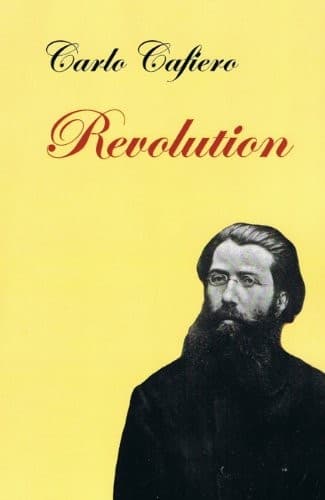
Carlo Cafiero
Tom Brown
Maurice Brinton
The only collection of Maurice Brinton's work, now with additional material and a new Introduction.
Shuli Branson
Bring out your inner anarchist! From relationships to school, work, art, even the way you organize your time, anarchism can help you find fulfillment, empathy, and liberation in the everyday. You may not realize it, but you are probably already practicing anarchism in your daily life. From the small questions such as 'where should I shop?' to the big ones like 'how do I love?', Scott Branson shows that anarchism isn't only something we do when we vote, protest, or read the news. With practical examples enriched by history and theory, the tips will empower you to break free from the consumerist trappings of our world. Anarchism is not just for white men, but for everyone. In reading this book, you can detach from patriarchal masculinity, norms of the family, gender, sexuality, racialization, individual responsibility, and the destruction of our planet, and replace them with ideas of sustainable living, ties of mutual aid, and the horizon of collective liberation.
Murray Bookchim
In the essays that make up this book, Murray Bookchin places the Spanish anarchist and anarcho-syndicalist movements of the 1930s in the context of revolutionary worker's movements of the pre-World War II era. These articles describe, analyze, and evaluate the last great proletarian revolution of the past two centuries. They form indispensable supplements to Bookchin's larger work, The Spanish Anarchists: The Heroic Years, 1868-1936. Read together, these works constitute a highly informative and theoretically significant assessment of the anarchist and anarcho-syndicalist movements in Spain. They are invaluable for any reader concerned with the place of the Spanish Revolution in history and with the accomplishments, insights, and failings of the anarcho-syndicalist movements.
Murray Bookchin
The Heroic Years 1868-1936 A long-awaited new edition of the seminal history of Spanish Anarchism. I have learned a great deal from this book. It is a rich and fascinating account.' - Howard Zine'
Jacob Blumenfeld, Chiara Bottici & Simon Critchley (eds)
The concept of anarchy is often presented as a recipe for pure disorder. The Anarchist Turn brings together innovative and fresh perspectives on anarchism to argue that in fact it represents a form of collective, truly democratic social organization. The book shows how in the last decade the negative caricature of anarchy has begun to crack. Globalization and the social movements it spawned have proved what anarchists have long been advocating: an anarchical order is not just desirable, but also feasible. The contributors, including leading anarchist and critical theorists, argue that with the failure of both free-markets and state socialism the time has come for an "anarchist turn" in political philosophy. In doing so they relate the anarchist hypothesis to a range of other disciplines such as politics, anthropology, economics, history and sociology.
Leopoldo Bonafulla
David Berry
The first English-language evaluation of the French anarchist movement between World War One and World War Two. Using an impressive array of archival sources and personal interviews, Berry's original research explores the debates and growing pains of a large, working class movement facing great obstacles. Focusing on the organised wings of the movement - the syndicalist and anarcho-communist group - it offers a ringside seat to the legacy of the First International, the Russian Revolution and the subsequent Bolshevik treachery, as well as the fight against fascism.