354 books available
Peter Stalker
Deric Shannon (ed)
Shannon explores the origins and ramifications of the Great Recession, as well as the experiences of those living through it. Crisis is a recurring trait of capitalism and a necessary one for the economy to continue as it does. How can we learn from capitalist catastrophes unless we connect historical patterns to contemporary conditions? Divided into five sections - Origins, Effects, The Response of the Dispossessed, The Ruling Class Response and Education and the Student Response - the contributors outline the problem and offer tangible strategies for economic sustainability.
Tracy Rosenthal & Leonardo Vilchis
Abolish Rent takes aim at one of the foremost engines of inequality and injustice. Rent drives millions to debt, despair, and onto the streets. The social cost of rent is too damn high. Written for anyone fed up with the permanent housing crisis, complicit politicians, and real estate greed, Abolish Rent dissects our housing system from the perspective of those it immiserates. Through brisk, unequivocating analysis and striking stories of resistance, it shows us how tenants can, through organizing and collective action, finally rebalance the scales. From two co-founders of the largest tenants union in the country, this deeply reported account of the resurgent tenant movement centers poor and working-class people who are fighting back, staying put, and remaking the city in the process. Authors Tracy Rosenthal and Leonardo Vilchis take us to trilingual strategy meetings, raucous marches against gentrification, and daring eviction defenses where immigrants put their lives on the line. These are the seeds of the revolutionary movement we need to make our housing, our cities, and the world our home.
Immanuel Ness
Humphrey McQueen
Marcela López Levy
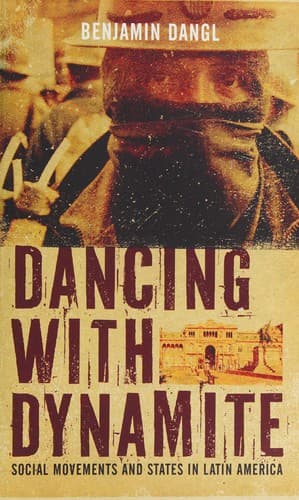
Since the 1970s, a brutal transference of resources from the poor to the rich has taken place here in Argentina. This book looks at the politics which led to mass poverty and unemployment, and describes the rich and varied social responses to economic meltdown and political crisis.
Naomi Klein
Jenni Keasden & Natalia Szarek
Mark Hayes
Benjamin Dangl
Isabelle Fremeaux & Jat Jordan
Chronicles the story of the ZAD (zone to defend), a resistant land occupation emerging out of a decades-long struggle which stopped a new airport project
Andrew Frazer
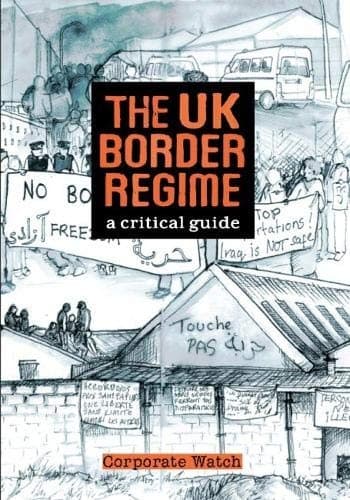
CORPORATE WATCH.
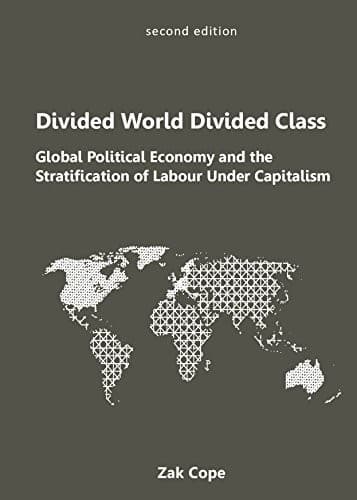
Zak Cope
Divided World Divided Class charts the history of the 'labour aristocracy' in the capitalist world system, from its roots in colonialism to its birth and eventual maturation into a full-fledged middle class in the age of imperialism. It argues that pervasive national, racial and cultural chauvinism in the core capitalist countries is not primarily attributable to 'false class consciousness', ideological indoctrination or ignorance as much left and liberal thinking assumes. Rather, these and related forms of bigotry are concentrated expressions of the major social strata of the core capitalist nations' shared economic interest in the exploitation and repression of dependent nations. The book demonstrates not only how redistribution of income derived from super-exploitation has allowed for the amelioration of class conflict in the wealthy capitalist countries, it also shows that the exorbitant 'super-wage' paid to workers there has meant the disappearance of a domestic vehicle for socialism, an exploited working class. Rather, in its place is a deeply conservative metropolitan workforce committed to maintaining, and even extending, its privileged position through imperialism. This second edition includes new material such as data on growing inequality between the richest and poorest countries; data illustrating rising real wages in Imperial Britain; explication of the concepts of value, monopoly capital and unequal exchange and their ramifications for the global class structure; discussion of social imperialism on the left; responses to critiques surrounding the thesis of mass embourgeoisement through imperialism; as well as further information on a range of subjects.
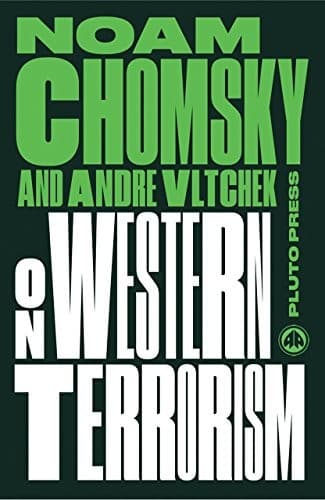
Noam Chomsky & Andre Vltchek
Admired by some, condemned by others, and feared by all--the military might of the West is undeniably colossal. In On Western Terrorism, world-renowned intellectual Noam Chomsky discusses Western power and propaganda with filmmaker and investigative journalist Andre Vltchek. It offers the perfect introduction to Chomsky's significant political thought and provides an accessible approach for anyone who wishes to better understand the West's fraught role in the world. Beginning with stories of the New York newsstand where Chomsky started his political education as a teenager, the discussion broadens out to encompass colonialism, imperial control, propaganda, the Arab Spring, and drone warfare. Chomsky and Vltchek offer a powerful critique of the legacy of colonialism, touching upon many countries including Syria, Nicaragua, Cuba, China, Chile, and Turkey. Updated with a fresh design and a new foreword by Chomsky, On Western Terrorism remains an influential and powerful critique of the West's role in the world, inspiring all who read it to think independently and critically.
Noam Chomsky
A collection of extensive interviews with the world's greatest public intellectual on four years of an American nightmare.
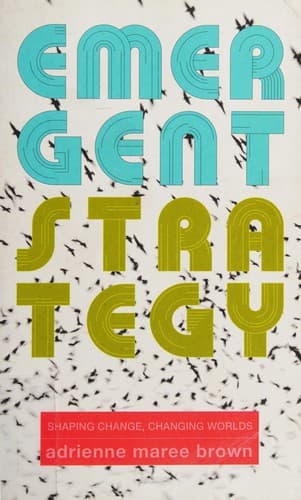
Adrienne Maree Brown
Emergence is the way complex systems and patterns arise out of a multiplicity of relatively simple interactions. In the framework of emergence, the whole is a mirror of the parts. Existence is fractal - the health of the cell is the health of the species and the planet. Change is constant. This book is about how we can shape the changes we experience to match our intentions using strategic methods that are as adaptive, resilient decentralised, and interdependent as the patterns of flocking birds or differentiating cells. A secular spirituality based equally on science and science fiction.
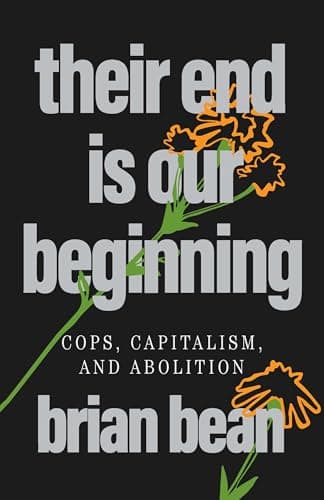
Brian Bean
A deeply reported analysis of the connections between policing and capitalism, centering global lessons of revolt and resistance Where do cops come from and what do they do? How did "modern policing" as we know it today come to be? What about the capitalist state necessitates policing? In this clear and comprehensive account of why and how the police--the linchpin of capitalism--function and exist, organizer and author brian bean presents a clear case for the abolition of policing and capitalism. Their End Is Our Beginning traces the roots and development of policing in global capitalism through colonial rule, racist enslavement, and class oppression, along the way arguing how police power can be challenged and, ultimately, abolished. bean draws from extensive interviews with activists from Mexico to Ireland to Egypt, all of whom share compelling and knowledgeable perspectives on what it takes to--even if temporarily--take down the cops and build a thriving community-organized society, free from the police. The lessons they offer bring nuance to the meaning of "solidarity" and clarity to what "abolition" and "revolution" look like in practice. Featuring illustrations by Chicago-based artist Charlie Aleck, Their End Is Our Beginning is an incendiary book that offers a socialist analysis of policing and the capitalist state, a vital discussion of the contours of abolition at large, and the revolutionary logic needed for liberation.
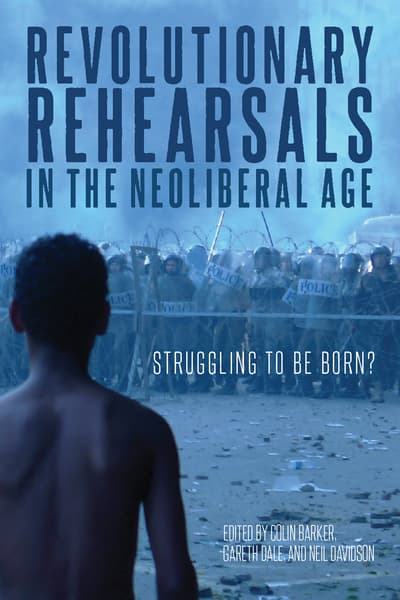
Colin Barker, Gareth Dale & Neil Davidson (eds)
This indispensable volume surveys revolutionary upheavals across the world between 1989 and 2019, drawing lessons for theorizing revolution today.
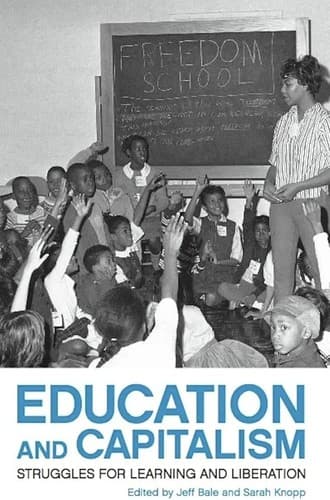
Jeff Bale, Sarah Knopp
A conservative, bipartisan consensus dominates the discussion about what's wrong with our schools and how to fix them. It offers solutions" that scapegoat teachers, vilify unions, and impose a market mentality. But in each case, students lose. This book, written by teacher-activists, speaks back to that elite consensus and offers an alternative vision of learning for liberation.
Abolition Collective
The bold voices and inspiring visions of today's revolutionary abolitionist movement--a creative range of approaches to dismantling interlocking institutions of oppression and transforming the world.
Angry Workers
A W Zurburgg
This anthology presents diverse voices of men and women who questioned and opposed the First World War: liberals, radicals and pacifists, anarchists and socialists, soldiers and noncombatants.--Publisher's description.
Working Class History
"Working Class History presents a distinct selection of people's history through hundreds of "on this day in history" anniversaries that are as diverse and international as the working class itself. Going day by day, this book paints a picture of how and why the world came to be as it is, how some have tried to change it, and the lengths to which the rich and powerful have gone to maintain and increase their wealth and influence"--